It’s that time of year again, and if you haven’t yet filed your Income Tax Return (ITR), the clock is ticking. This isn’t just a chore; it’s a critical part of your financial life. For a lot of people in India, the thought of sorting through tax documents brings a sense of dread. You’re not alone. The landscape of income tax can feel like a dense jungle, with new rules and forms cropping up every year. But what if we told you it doesn’t have to be a harrowing experience? This guide will walk you through the final steps to ensure a smooth, penalty-free tax season.
Why This Deadline Is a Big Deal
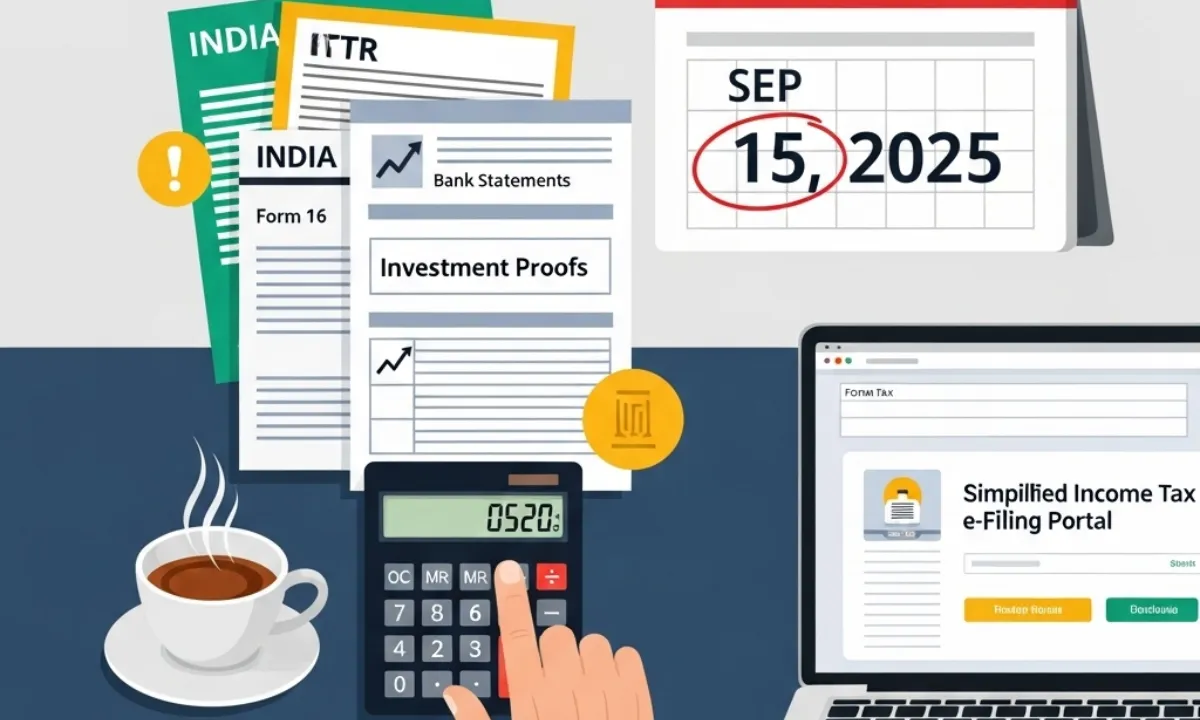
The ITR filing deadline for the financial year (FY) 2024-25 is September 15, 2025. This date looms large, particularly for individuals whose accounts need auditing. Missing this date has real consequences, extending far beyond a simple fine. A financial expert from a leading advisory firm recently noted, “The real trouble with late filing isn’t just the monetary penalty, but the loss of critical benefits. You can’t carry forward certain losses, and you lose the chance to claim some exemptions.”
Read More: Insurance Premium in India: Will GST Cut Bring Real Relief?
A common misconception is that if your company deducts tax at source (TDS), you don’t need to file. This couldn’t be farther from the truth. Filing your ITR is mandatory if your gross total income before deductions exceeds the basic exemption limit. This is your chance to claim a refund for any excess tax paid. Think of it this way: your ITR is your official communication with the tax department, telling them your story for the year.
Your Pre-Filing Checklist: A Financial Treasure Hunt
Before you even touch the tax portal, you need to gather your documents. This process is like a financial treasure hunt, and every piece of paper is a clue.
- Form 16: This is your salaried employee’s bible. Your employer provides this, showing your salary, taxes deducted, and applicable exemptions. If you’ve switched jobs, make sure you have Form 16 from all your employers.
- AIS and Form 26AS: The Annual Information Statement (AIS) and Form 26AS on the income tax portal are your best friends. They contain a consolidated record of your financial transactions, including TDS/TCS details and high-value transactions. Cross-referencing your documents with these forms can prevent future discrepancies.
- Bank Statements and Other Records: Go through your bank statements, demat account statements, and any investment records. Don’t forget to account for non-monetary transactions that might have tax implications, like gifts from non-relatives or profits from redevelopment of a property. A forgotten overseas asset, for example, could invite a hefty penalty.
The Great Tax Regime Debate: Old vs. New
The choice between the old and new tax regimes continues to baffle many. Here’s a simple way to think about it.
The New Tax Regime offers lower tax slabs but removes most exemptions and deductions. It’s a “take it or leave it” kind of deal. This is often appealing for individuals who don’t have many deductions to claim, like those who rent their homes or haven’t invested much.
The Old Tax Regime, on the other hand, allows you to claim numerous deductions, like those under Section 80C (for investments in PPF, ELSS, etc.), Section 80D (for medical insurance), and home loan interest. This regime works best for those who have planned their finances to maximize these benefits.
According to a recent report, a significant number of taxpayers are opting for the new regime. But remember, for non-business income earners, you can still switch regimes at the time of filing your return. The income tax portal has a calculator that can help you decide. Take a moment, plug in your numbers, and see which option saves you more money.
Selecting the Right ITR Form: Not as Simple as 1, 2, 3
Picking the correct ITR form is a crucial step. The form you use depends on your sources of income.
- ITR-1 (Sahaj): This is for residents with a total income up to ₹50 lakh. It covers income from salary, one house property, and other sources like interest.
- ITR-2: For individuals and HUFs (Hindu Undivided Families) who have income from capital gains (like stocks or mutual funds) or more than one house property, but no business income.
- ITR-3: This form is for individuals who have income from a business or a profession.
- ITR-4 (Sugam): This is a simplified form for small businesses and professionals who choose to pay tax on a presumptive basis.
Choosing the wrong form can lead to a defective return, requiring you to file a revised one. So, take your time and read the criteria for each form carefully.
Try This: NPS Vatsalya Calculator
The Last-Minute Rush & Its Consequences
It’s tempting to wait for an extension, but relying on one is a high-risk gamble. Forgetting to file on time can lead to a late fee of up to ₹5,000. And if you have unpaid tax, you’ll be charged an interest of 1% per month. Furthermore, you might lose the ability to carry forward losses from capital gains.
A refund, if you’re due one, will only be processed after you’ve filed. Without a filed return, that money stays with the government. Make sure you have a pre-validated bank account on the portal for a quick refund.
Don’t let the ITR filing deadline become a source of stress. Start today. Go to the income tax portal, gather your documents, and take control of your financial story. It’s a small investment of time that pays off in peace of mind.
Read More: EPFO 3.0 Features and Launch: What You Need to Know in 2025